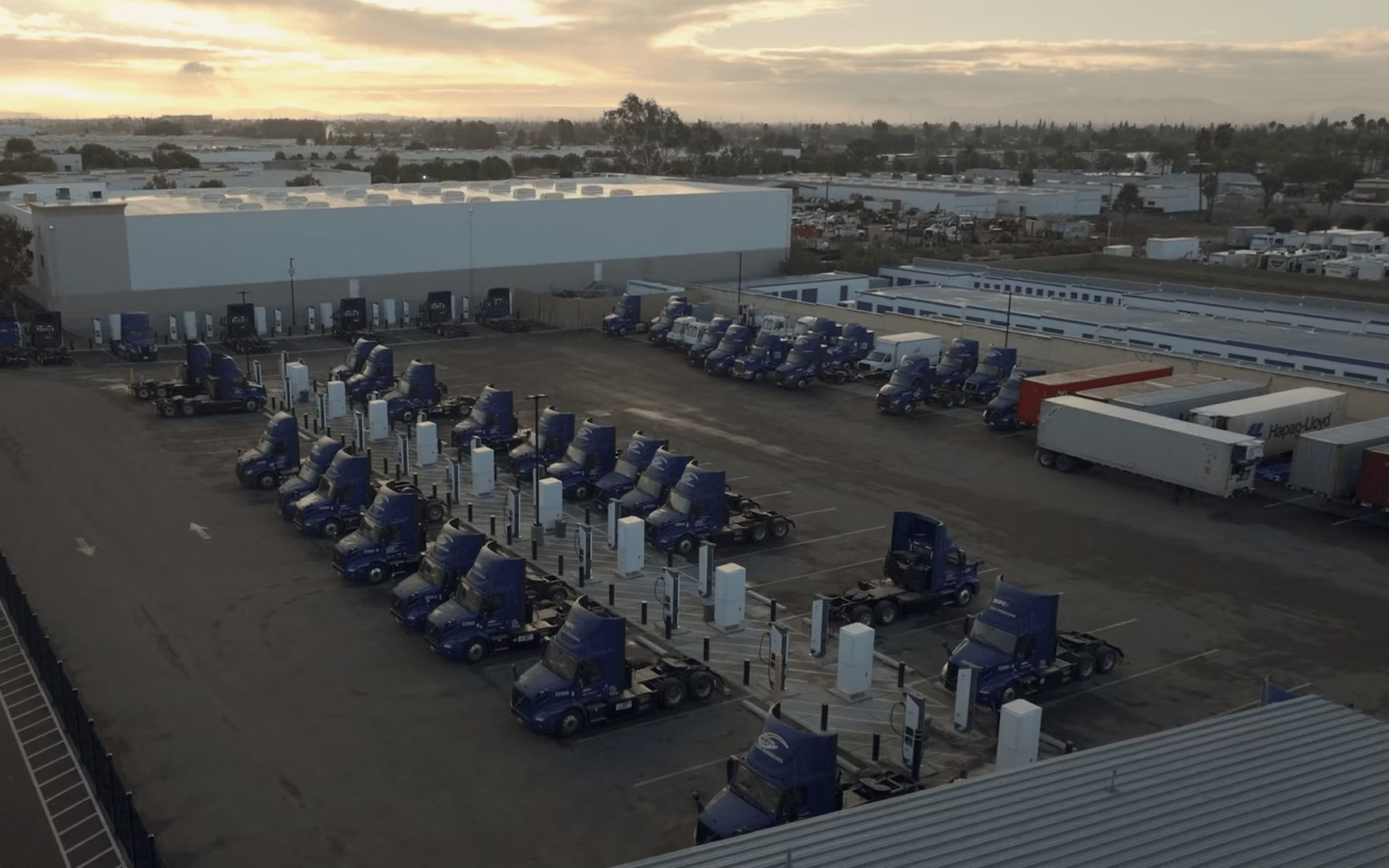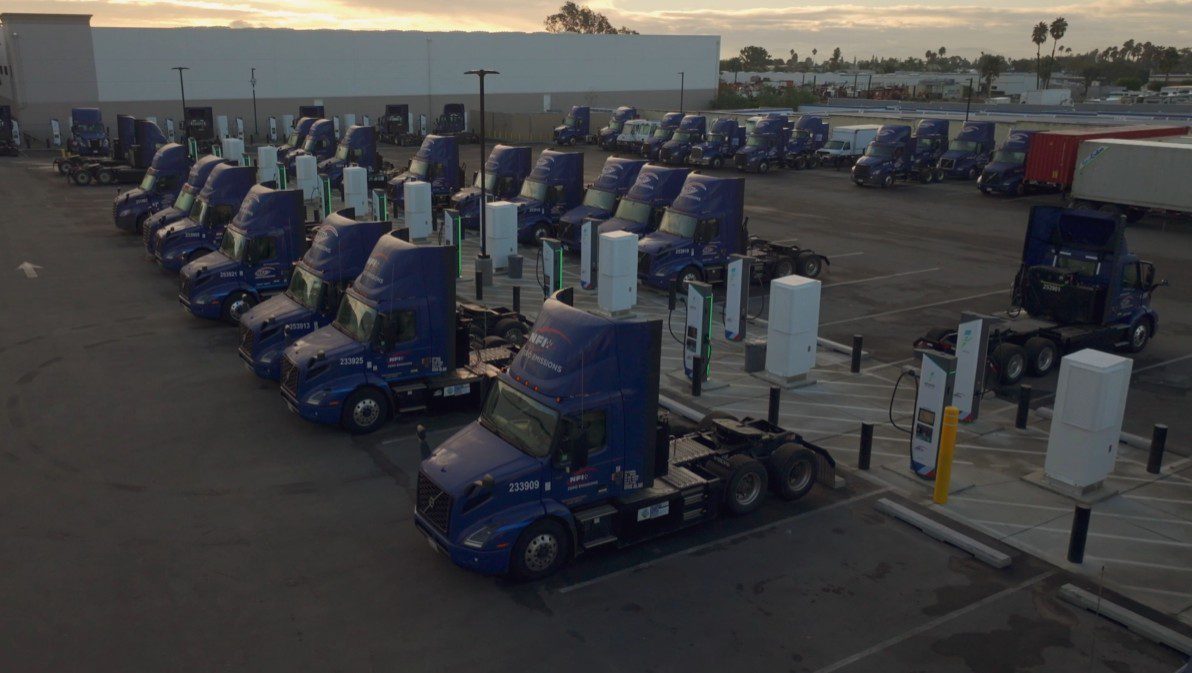
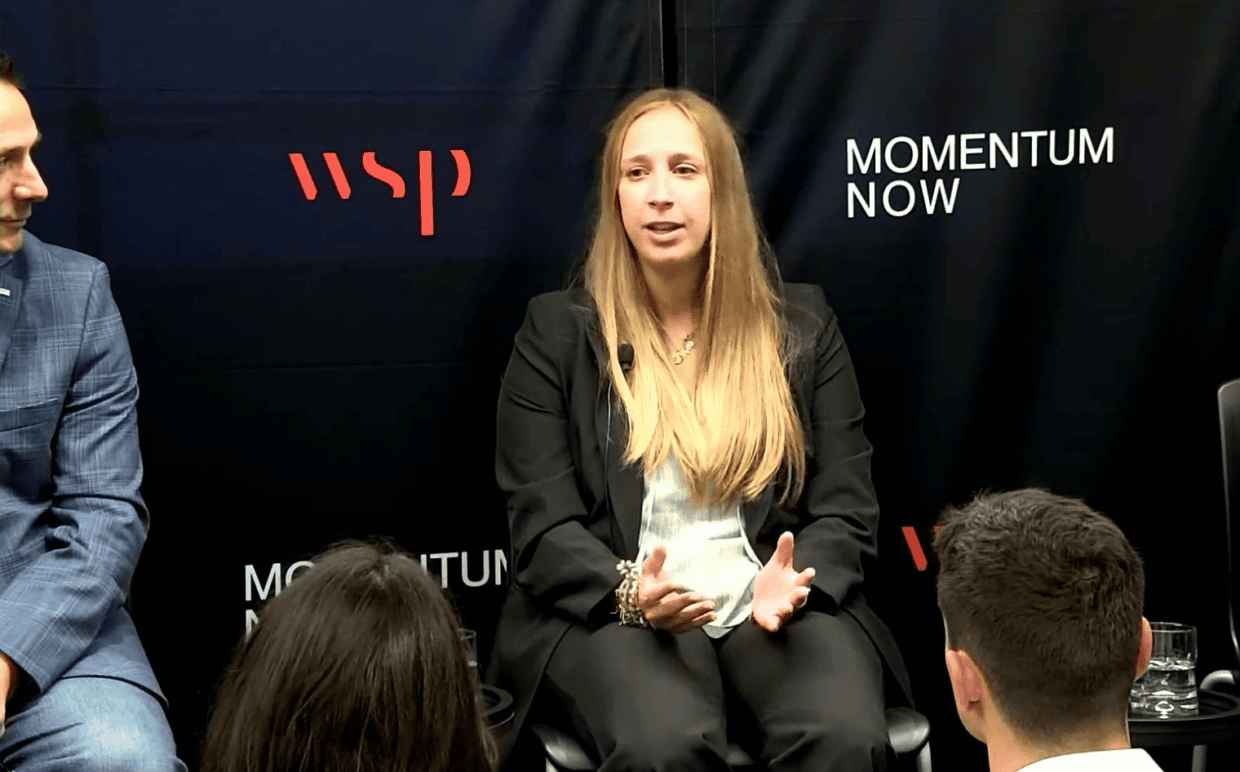
JETSI project partner NFI described progress with its electric heavy-duty truck fleet at an event hosted by WSP on September 24th during NYC Climate Week. Alexa Branco, NFI’s director of energy and sustainability, shared energy infrastructure insights and cost savings estimates related to the 50 battery-electric trucks deployed as part of the Joint Electric Truck Scaling Initiative (JETSI). The event, titled Maintaining Momentum: Why Leading Fleets Continue to Invest in Sustainable Transportation, reflected NFI’s continued progress with a fleet that has now grown to approximately 100 Class 8 battery-electric trucks, which haul drayage containers from the ports to warehouses in the greater Los Angeles region. NFI’s entire drayage truck fleet in Southern California is now fully electric.
Regarding sustainable transportation, “Our biggest success right now is our JETSI project,” said Branco. “We were able to deploy 50 battery electric trucks, 38 350-kW fast chargers, and a megawatt of solar that feeds into 7 MWh of battery energy storage. That battery storage has been the game changer…and has proven to us where EVs make sense, especially with fuel costs continuing to rise.”
Branco offered some remarkable estimates of the cost advantage of moving away from diesel. “When fuel costs were semi-normal in California, we still saw our EV rates down 25%, then after implementing the battery we were down 50%, and then after LCFS credits that California gives you back quarterly, we were down 75%,” compared to diesel fueling costs.
The battery storage that Branco described has 7-MWh of stored energy capacity, combined with a microgrid system, which came online over the summer of 2026. It allows NFI to store energy when it costs less, such as when NFI’s own solar panels are generating electricity or when utility prices are at daily lows. Then, NFI uses stored energy for truck charging from 4:00 to 9:00pm, when the utility’s time-of-use (TOU) energy prices are higher. This strategy also reduces load on the grid when the region’s demand for energy is greatest.
Branco also touched on the benefits of EVs when complying with local air quality rules, such as South Coast AQMD’s Warehouse Indirect Source Rule (WAIRE). “We were able to prove out how we could support that rule and support our distribution customers by having our port services drayage fleet servicing those same warehouses.” In other words, NFI’s electric truck trips to customer warehouses are helping NFI’s customers comply with that rule.
On the workforce side, Branco noted, “Our California drivers love [driving battery-electric trucks] and would never go back to diesel.” She explained that NFI believes in taking care of its drivers, and the quieter ride, less vibration, absence of diesel smell and other benefits of the trucks have been popular upgrades with drivers. Branco was curious how NFI drivers on the East Coast might feel differently about EVs, and sounded pleasantly surprised: “We moved over to Virginia and deployed ten vehicles there… We got a call a week later and we heard they were all telling each other, It drives like a Cadillac, and we’re not going back. It was really exciting to see how quickly they all adopted it. We want to continue to innovate for our drivers, making them safe and comfortable, and some of those things come naturally in an EV model.”
Branco said a biggest lesson NFI learned as it added EVs on the East Coast was the challenge presented by utility power pricing structures: “In the state of Virginia, the on-peak times are 10am to 10pm, and in the winter it is 7am-10pm. For a trucking fleet that’s the equivalent of telling a truck fleet they can’t fuel diesel from 10am to 10pm.” Her point was that it would be helpful if more geographies had a framework for maintaining affordable energy prices for EV fleet charging during the day.
Branco offered more lessons learned. She said, “Don’t overdo it,” meaning it’s wise to move to an electric fleet at a manageable pace. She also emphasized finding the right partners, ones with the resources you will need to succeed in a rollout and the knowledge that your organization doesn’t yet have.
Branco highlighted the importance of the funding provided by State of California, that helped pay for infrastructure additions such as the microgrid that NFI built for their charging depot. The California Energy Commission (CEC) and the California Air Resources Board (CARB) were the top two funders of the JETSI project. That investment has allowed early adopters NFI and Schneider to scale and pilot advanced energy systems along with the electric semi-trucks. The project now serves as a blueprint for other fleets as they consider electric truck deployments, and lessons learned through the project are shared publicly via the content at JETSIproject.com to help advance the industry’s knowledge about fleet deployments of battery-electric trucks.
View the entire WSP webinar on ACT News, which includes valuable insights from several fleets with substantial experience operating sustainable vehicles: NFI’s freight logistics fleet, the NYC DCAS municipal fleet, Penske’s nationwide rental truck fleet, and Siemens’ vehicle fleet.